

Blog
Get Pay Right on ADP Workforce Now® Next Gen™
Bringing trusted compensation intelligence and seamless planning to even more ADP users.
Written by Salary.com Staff
April 10, 2026

The Pew Research Center reports that women earned about 85 cents for every dollar earned by men. That gap matters and shows why pay inequality is an issue that organizations should not ignore. Employees want to know if they get paid fairly for their work, skills, and experience.
This article will discuss what pay inequality in the workplace is, provide some examples, and outline simple steps on how organizations can address this issue.
Pay inequality happens when workers doing similar work get paid differently because of personal traits like gender, race, or age, rather than their skills or performance.
It does not mean everyone should earn the same amount. It means that employees in similar roles, with the same experience and responsibilities, should receive fair and equal pay regardless of background.
Many organizations today use solutions like Salary.com’s CompAnalyst Software to help address this issue. It gives HR teams real-time market data, making it easy to compare salaries and ensure pay is competitive and fair.
The table below highlights the current status of pay gap in the workplace:
| Category | Subcategory | Pay gap |
|---|---|---|
| Uncontrolled gap | All full-time workers | Women earned 83 cents of every dollar men earned |
| Controlled gap | Adjusted for job title and other compensable factors | Women earned 99 cents for every dollar men earned |
| Education level | High school diploma | Women earned 20.1% less than men |
| College degree | Women earned 24.2% less than men | |
| Advanced degree | Women earned only $49.45 compared to $65.11 men earned | |
| Race/ethnicity | Black women | Black women earned 24.7% less than white men earned |
| Hispanic women | Hispanic women earned 27.4% less than white men earned |
Here's why addressing this issue matters for your business:
Legal and financial risk: Pay discrimination lawsuits can cost a lot. Companies might have to pay millions in fines, back pay, and legal fees.
Employee retention and performance: Unfair pay drives turnover. According to SHRM, replacing an employee can cost 50% to 200% of their salary. Employees who feel fairly compensated are more likely to work harder and remain with the company.
Attract top talent: Job seekers now check companies’ pay practices. Companies with fair pay attract more skilled candidates, while those with unfair pay struggle to hire.
Reputation and brand damage: News about pay discrimination spreads fast. It can harm a company’s reputation, lose customer trust, and scare investors.
Below are some examples of pay inequality in the workplace:
In November 2024, Disney agreed to pay $43.3 million to settle a lawsuit from female employees in California who said they were paid less than men doing the same work for the past eight years. The company also promised to bring in a labor economist to review salaries in California over the next three years to make sure everyone is paid fairly.
The lawsuit started when a female employee discovered that six men with her same job were making more than she was. One man was even earning $20,000 more, even though he had less experience.
Over time, about 9,000 current and former employees joined the case. They said Disney set starting salaries based on what people earned before, without fixing the existing gender pay gaps, which kept women from being paid equally for many years.
In January 2025, Mastercard agreed to pay $26 million to settle a class action lawsuit filed on behalf of about 7,500 female, Black, and Hispanic employees. The company also agreed to bring in outside consultants to review its pay policies and to hire an industrial psychologist to examine possible bias within the organization.
The employees said they were paid less than white men in similar jobs and were often placed in lower positions than their experience deserved. They also got smaller raises and fewer promotions, which caused the pay gap to grow over time.
In 2022, Google agreed to pay $118 million to settle a lawsuit from about 15,500 women who said they were paid less than men doing the same work. They also said women were often put in lower-paying jobs, promoted less, and hired at lower levels than men.
Google didn’t admit wrongdoing but settled the case, which had been going on since 2017. And they agreed to have outside experts review the company’s pay practices for three years to help make pay fairer.
Here are steps on how you can address pay inequality within your organization:
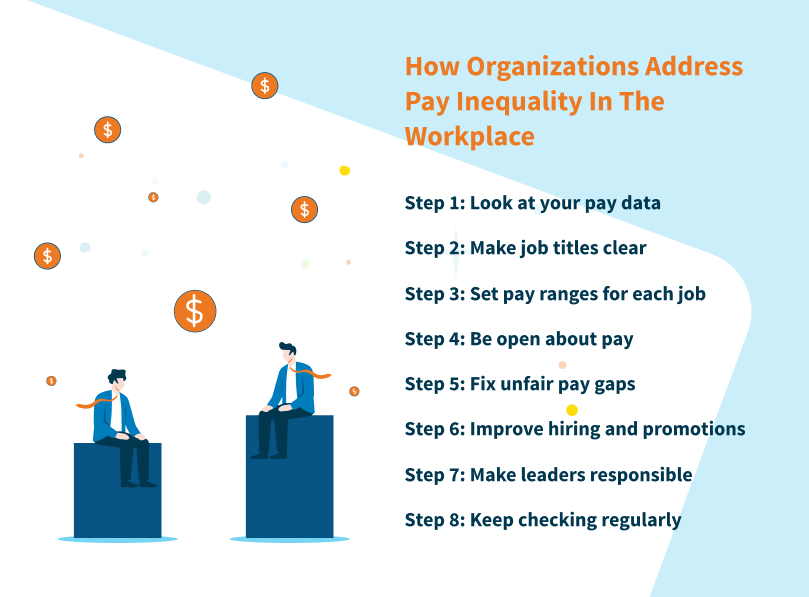
Collect information on salaries, bonuses, and other rewards. Group employees by job, department, and location. Spot any pay differences that aren’t explained by experience or performance.
Make sure job titles and levels mean the same thing across the company. Clearly describe what each job requires so pay comparisons are fair.
Create a minimum, midpoint, and maximum salary for every role. This helps keep pay consistent and fair. Solutions like Salary.com's CompAnalyst can help you easily compare with market rates.
Share salary ranges, explain how pay is decided, and encourage employees to talk about it. Transparency helps prevent unfair pay and closes gaps.
If you find unexplained pay differences, fix them right away. Raise pay where needed. Never lower anyone’s pay to close a gap.
Don’t ask candidates what they earned before. Base offers on your pay ranges and the person’s skills. Have HR review offers, raises, and promotions to make sure they’re fair.
Managers and leaders should be accountable for fair pay. Share pay reports with them and make sure they act on any problems.
Pay fairness isn’t a one-time fix. Check pay gaps for gender, race, and department regularly to make sure problems don’t come back.
Here are commonly asked questions related to the topic:
No. Pay inequality is when pay differs between groups. Pay discrimination is illegal and happens when someone is paid less because of race, gender, or another protected characteristic. All pay discrimination causes inequality, but not all pay inequality is discrimination. Some differences come from job level, experience, or location.
How long it takes to close pay gaps depends on their size and the organization’s commitment. Companies that do a full audit, set aside a budget for corrections, and update hiring and promotion practices can see progress in one to two years. Fully closing gaps, especially those related to representation and career growth, can take three to five years. Starting early helps organizations reach equity faster.
The most common mistake is treating pay equity as a one-time audit. Companies may make adjustments and think the problem is solved, but pay gaps reappear with each new hire, promotion, and raise. Without ongoing monitoring, including equity in annual pay processes, and holding managers accountable, the gaps will grow again.

The latest research, expert advice, and compensation best practices all in one place.
Blog
Bringing trusted compensation intelligence and seamless planning to even more ADP users.

Blog
Learn how to train managers for effective pay conversations and build trust.

Blog
Total rewards package flexibility lets employees choose what matters - pay, perks, and benefits tailored to their needs.